MONTI TUNDI Porto Cervo
Realization: Filigheddu Costruzioni (Porto Cervo)
“This home nestled among rocks and vegetation sits in a landscape partially recreated through a highly complex project.”
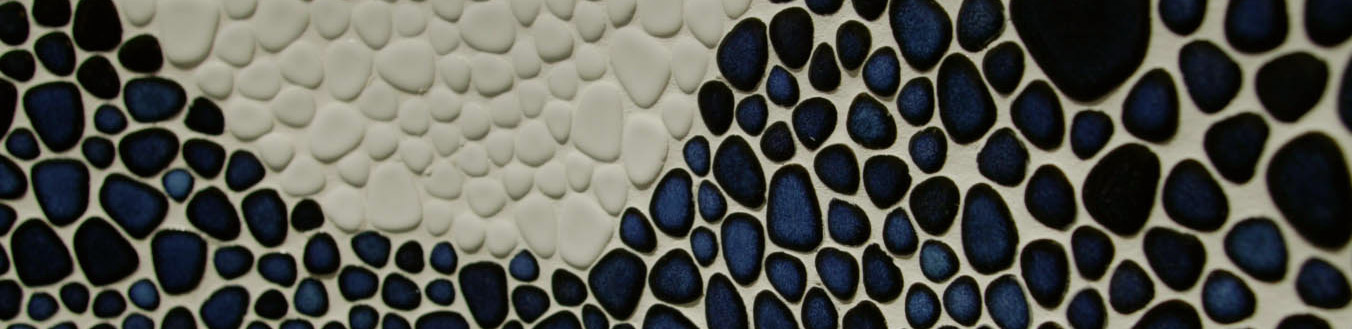
With its extraordinarily beautiful panorama, this single-family home is an expert “creation”. Not just in the broad sense of the word, the one that accompanies the building of any structure, but here in a decidedly literal sense. The land was clean, with its characteristic earth and Mediterranean brushwood, and it was here that the architect Gérard Béthoux wished to give life to a highly complex rocky landscape that to the visitor’s eyes would appear so natural as to leave no suspicion of the enormity of the task carried out. The work was only possible thanks to the obvious skill of the Filigheddu contracting company workers who put the architect’s rather daring ideas into action. Great stone blocks were brought by mechanical means to the site, where they were carefully balanced with tremendous expertise; then, iron buttresses were put in place and, not unlike a complex surgical operation, bound with concrete, and “sutured”, as wounds are, with the vegetation that so generously covers them. The guiding idea behind the project was to recreate a landscape in which the house could develop with extreme naturalness, mostly hidden from the eyes of people arriving on the driveway, and sheltered, by means of a luxurious curtain of trees and bushes that were planted in the course of construction, from the gaze of nearby houses. Like other homes designed by this French-born architect, a distinguishing characteristic here is the feeling that the structure has always been there, that it is a question more of a renovation than a new construction. This derives not only from the choice of materials and how they are used, but also from the execution of each detail, reflecting remarkable craftsmanship. The masons, stonecutters, tilers, and carpenters who worked on this project, in fact, profited from their thorough knowledge of ancient traditions. The structure, which has a rational layout that makes the most of the spectacular sea view, has soft, enveloping, and never-aggressive forms. There are two striking features: the first is provided by the presence at the entrance of large sections of rock that, cemented together and blended harmoniously with the wall masonry, make two spectacular fixed-glass windows of significant proportions. The second feature is the spiral staircase with an open centre that rises, sinuous and swirling, to the first upper story. The interior has softly moulded walls where junctures are never rectilinear, and the ceilings are cross vaulted. These are design features that cannot be translated into executive drawings, but are realized during the construction phases, thanks to the close collaboration between architect and tradesmen, using techniques similar to those of an artist. There are few traditional windows; all are of different sizes between them, and some resemble irregularly shaped spyglasses focused on the landscape. Ai rivestimenti di pareti e pavimenti il progetto di Béthoux dà grande rilievo: con un lavoro manuale di precisione certosina sono stati applicati frammenti di lava smaltata nella cabina doccia del bagno padronale e con altrettanta perizia è stato rivestito il lavandino incassato nella zona barbecue all’esterno, con tessere irregolari di grès, cotto a fuoco di legna. Béthoux’s design puts great emphasis on the wall-coverings and the flooring: with painstaking care, fragments of glazed lava were laid by hand in the master bathroom shower, and similar skill was used to tile the sink basin in the outdoor barbecue area, using irregularly-shaped stoneware tesserae, fired in a woodburning kiln. A stonecutter’s hand carved a large block of travertine to make the basin that now occupies centre-stage in the bathroom, while the wrought iron pieces by the artist Fortuné Evangeliste enhance the openings with sculptural grates and decorate the handsome main entrance with snake-like hinges. One last element not to be overlooked is the swimming pool facing the house with its gentle curves like those of the small bays along the coast. Here, too, as in the terrain all around the residence, it is hard to imagine that the rocks at the water’s edge were put there recently; they have been placed in such a natural way that nothing distinguishes them from the flat rocks found on the site.


